Published 5 May 2026
Madrid's bus-taxi lanes, explained
Where the reserved lanes that genuinely save time are: the M-23 approach from the airport, and the terminal access roads — the T4 one above all.
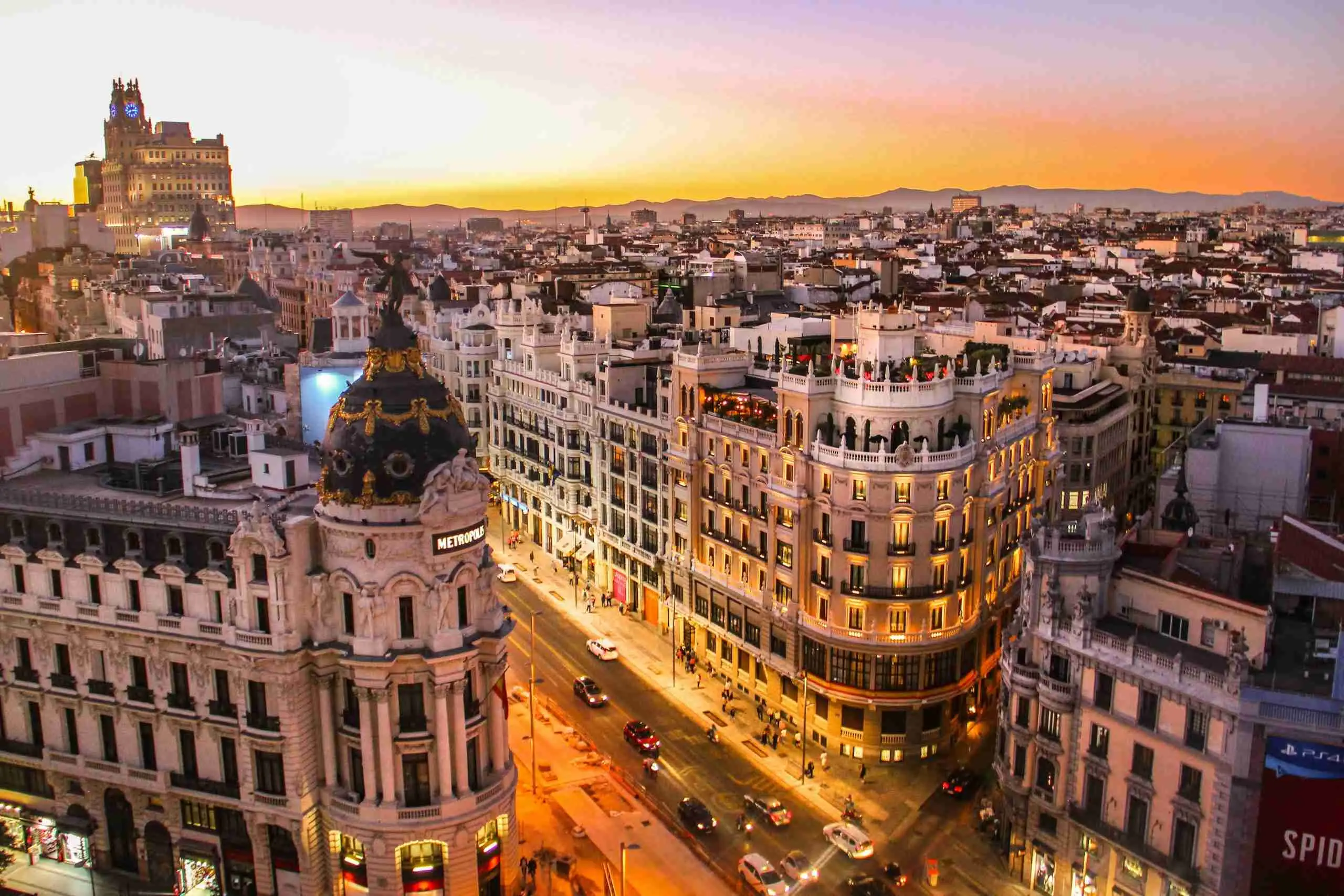
If you have ever taken a taxi across Madrid at rush hour and watched it sail past lines of stationary cars, you already know what this is about. It is worth understanding why, because it explains a good deal about how the city moves — and about why sometimes you arrive and other people do not.
What they are
Reserved lanes, almost always the right-hand one, with BUS painted on the tarmac and a solid line separating them from the rest. Public transport, taxis, emergency vehicles and, on some stretches, motorbikes and bicycles may use them. A private car in one is committing an offence.
In the city they run along the axes that seize up at 8:30 and 19:00: Castellana, Príncipe de Vergara, Bravo Murillo, Alcalá and several approaches to the M-30. No coincidence — they are placed exactly where it hurts.
The difference is not speed, it is stopping. A car in a jam is not moving slowly; it moves in bursts and stops. A reserved lane does not remove the traffic lights, but it does remove the twenty cars in front of you at each one. Over twenty minutes on the Castellana, that is seven or eight minutes.
But the two lanes that genuinely change a journey are not in the centre.
The M-23 approach, coming in from the airport
This is the one nobody knows about, and the one people are most grateful for.
Coming back from the airport towards the south-east of the city, the M-23 has a reserved lane on the way in. While the rest of the traffic piles into the approach, we carry straight on.
That is not a technical footnote. It is the difference between reaching your hotel at a reasonable hour and spending fifteen or twenty minutes looking at the back of someone’s car after an eight-hour flight. When you are tired, carrying luggage and thinking about a shower, those minutes weigh double.
It is also why a taxi and a ride-hailing car leaving Barajas at the same moment do not arrive together. The ride-hailing car cannot use that lane.
The terminal access roads, and the T4 one in particular
The inbound lane matters. This one matters more, because what is at stake is not comfort. It is your flight.
The Barajas terminals have access roads reserved for taxis. The T4 one is where the difference shows, because T4 handles Iberia and its alliance and saturates completely first thing in the morning.
Between five and seven in the morning on a weekday, that lane saves twenty minutes without trying. That is the early-departure window, the access-jam window, and precisely the worst time to be doing mental arithmetic about whether you will make security.
A private car or a ride-hailing vehicle joins that queue. A taxi goes around it. When your margin is half an hour, that is the only number that counts.
Where the 25% comes from
The figure of up to 25% less time than a vehicle that cannot use these lanes is not marketing, it is arithmetic — traffic lights and funnels. Urban journeys at peak hour, plus those two airport approaches, are where nearly all of it accumulates.
What this means if you have a flight
If you are leaving Madrid early, book. Not for the lane — we have the lane either way — but because the car is then at your door at the agreed time, you know which car it is, and the driver has already planned the route with the reserved access included.
And if you would rather not think about the fare either, we can agree a fixed price in advance: outward, return or both.